On this page
Good small-business web design does three jobs: loads fast, ranks on Google, and turns visitors into calls. Everything else - animations, awards, agency vanity - is decoration. Here's what to demand, what to pay, and what to walk away from.
That sounds blunt, and it's meant to. The web-design industry sells small businesses on the wrong things - pixel-perfect mockups, trendy effects, portfolio prestige - while the three jobs that actually determine whether the website makes money get treated as afterthoughts. Flip that priority order and web design gets simpler to buy and far more effective. Let's break down the three jobs, then exactly what to demand for your money.
The three jobs
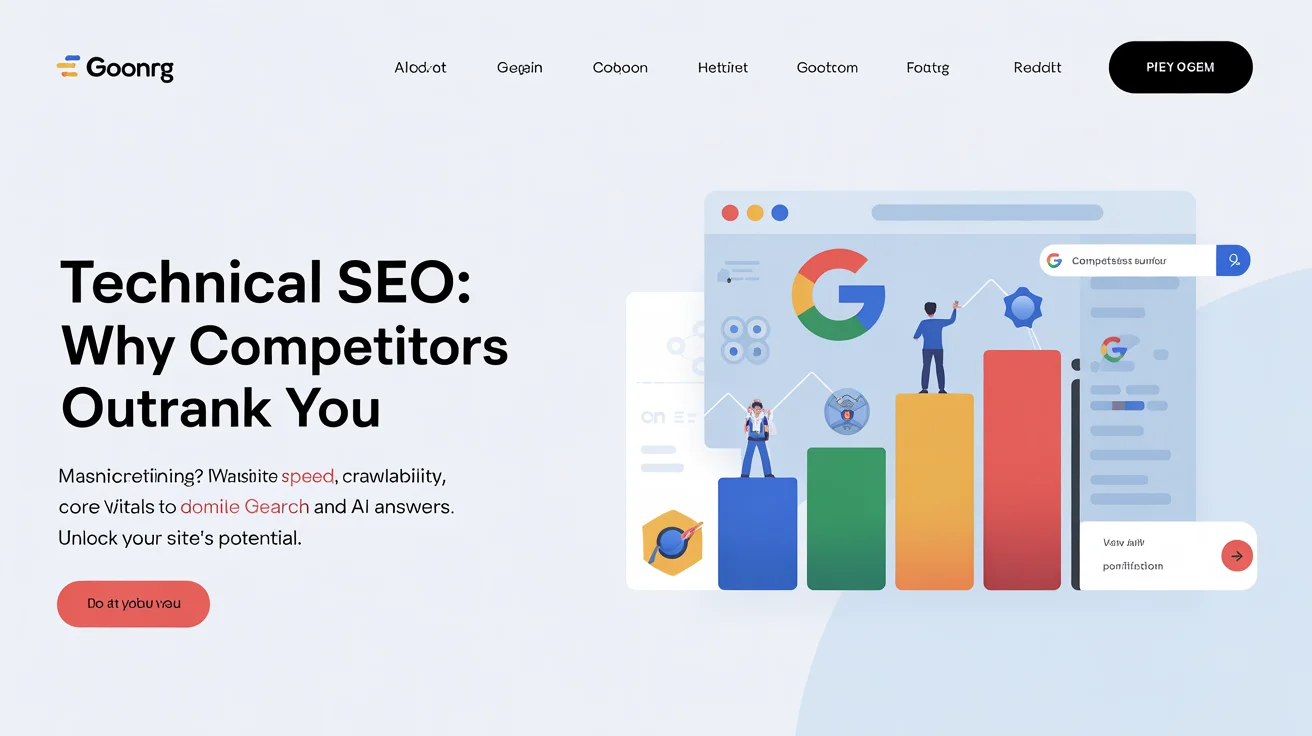
Job one: load fast. Speed is the foundation everything else stands on. A slow site loses visitors before they read a word - people abandon pages that take more than a couple of seconds, and Google ranks slow sites lower. If your web designer treats performance as optional, they've misunderstood the assignment. Fast isn't a feature; it's the prerequisite, which is exactly why technical SEO is where competitors outrank you.
Job two: rank on Google. A website nobody finds is a brochure in a drawer. Web design and SEO aren't separate purchases - the design decisions (structure, headings, page speed, mobile layout, clean code) are SEO. A site built with an SEO foundation shows up when customers search; one built purely for looks doesn't. If "will it rank?" isn't part of the design conversation, you're buying decoration.
Job three: turn visitors into calls. Traffic that doesn't convert is a vanity metric. Good design guides a visitor toward one obvious action - call, message, book - from every page. Clear calls to action, an easy contact path, trust signals, and zero friction. A site can be fast and findable and still fail here if it doesn't make the next step effortless. And the job doesn't finish when the form is submitted: an enquiry that lands at 9pm and gets a reply on Monday morning has usually already hired somebody else, which is why automated lead follow-up answers every new lead within seconds rather than leaving it sitting in an inbox.
Nail all three and the website is an employee that works every hour of every day. Miss any one and the other two are wasted: fast-and-findable but unconvincing loses the sale; beautiful-and-convincing but invisible never gets the chance.
It's worth sitting with why the industry gets this backwards. Design is the part that's easy to show off - a designer can put a gorgeous mockup on a screen and get a signature in the room. Speed, search structure, and conversion are invisible in a pitch; you only feel them months later when the traffic does or doesn't come and the phone does or doesn't ring. So the incentive is to sell what demos well, not what performs. The businesses that win are the ones who refuse that trade and judge a designer on the boring, decisive questions: how fast, how findable, how easy to contact. Ask those in the first meeting and you'll immediately separate the people who build working websites from the people who build pretty ones.
Must-include checklist
Whatever you pay and whoever you hire, these are non-negotiable. If a proposal is missing any of them, it's incomplete:
- Speed and Core Web Vitals. Fast load times on mobile, verified - not promised. Ask for the numbers.
- Mobile-first design. Most of your visitors and most of Google's crawling are mobile. The phone experience is the main experience, not the afterthought.
- An SEO foundation. Clean structure, proper headings, title tags and meta descriptions, schema markup, and crawlable code - baked in from the start, not bolted on later.
- Lead capture on every page. A visible phone number, a simple contact form, and clear calls to action. Never make a ready-to-buy visitor hunt for how to reach you. Worth asking what happens to the calls you can't pick up, too - missed call text back turns an unanswered call into a text conversation instead of a competitor's job.
- Managed hosting. Fast, secure, maintained hosting included or clearly specified. The best design in the world is slow on a bargain server.
- Security and maintenance. A plan for updates, backups, and security - not "launch it and forget it."
- Analytics. So you can actually see traffic, sources, and conversions and know whether it's working.
That list is the difference between a website that earns its cost and a good-looking one that doesn't. Notice how little of it is about aesthetics - because aesthetics were never the hard part.
Pricing models
You'll encounter three ways to pay, and the right one depends on your situation more than your budget:
- Freelancer, paid once (roughly $500-$3,000): Fine for simple sites if - and it's a big if - the must-include checklist is covered and you have a plan for hosting and maintenance afterward.
- Agency, paid once ($3,000-$15,000+): Custom work and a real process, best when you need complexity and have budget for the ongoing costs a build alone won't cover.
- Subscription (from ~$299/month): Design, hosting, maintenance, and ongoing SEO bundled into a predictable monthly fee - usually the best fit for local businesses that want it handled without a big upfront hit.
The trap at every level is comparing sticker prices instead of what's included over time. A cheap upfront number that leaves out hosting, SEO, and maintenance isn't cheaper - it just defers the cost. We walked through that full three-year math in how much a website really costs in 2026; read it before you sign anything, because the honest number is the all-in one.
Red flags
Walk away - or at least ask hard questions - when you see these:
- No mention of speed or SEO. If the pitch is all visuals and says nothing about performance or getting found, they're selling decoration.
- Design shown, hosting and maintenance unmentioned. The gap is where your future costs and headaches hide. Get it in writing.
- Long contracts with no accountability. A lock-in with no measurable goals protects them, not you. Good work should earn the relationship monthly.
- "We'll get you to #1 on Google, guaranteed." Nobody can guarantee rankings. Anyone who does is either naive or dishonest.
- A portfolio of gorgeous sites you can't find in search. Ask to search for their clients' services in their cities. If the beautiful sites don't rank, beauty is all they sell. (If you want a neutral read on where your current site stands before any of these conversations, a free SEO audit covers speed, structure, and visibility in one pass.)
- No talk of mobile. In 2026 this is disqualifying on its own.
- Setup fees plus a long contract plus separate hosting bills. Stacked charges that make the true cost hard to see are a choice, and it's not made in your favor.
One more thing worth saying plainly, because it saves owners a lot of second-guessing: your website is never "done." The best small-business sites are treated as living tools, not finished monuments. Google changes, competitors improve, your services evolve, and AI search keeps rewriting how people find you. A site that was excellent two years ago and hasn't been touched since is quietly sliding backward. That's the real argument for bundling maintenance and ongoing SEO into whatever you buy - not because someone wants a recurring fee, but because a storefront that never gets restocked or repainted stops pulling customers in. Budget for the upkeep the same way you'd budget for keeping the lights on, and the site keeps earning.
Strip away the industry's noise and small-business web design comes down to a short, honest list: do the three jobs, include the checklist, price it transparently, and skip anyone waving a red flag. If you want all of that handled by one team - fast site, SEO foundation, lead capture, and managed hosting in a single plan - that's precisely what our small business web design is built to deliver, with Phoenix web design as the flagship Valley market and the lead and review automation that works those leads included on every plan.
Is your website winning, or quietly leaking?
Tick every box that is honestly true of your site today. Whatever you cannot tick is what we would fix first.
Your site is likely losing leads you already paid for.
Most of these gaps are invisible until you measure them, and every one of them sends high-intent visitors back to the search results. The good news: they are all fixable, and usually fast.
No jargon, no obligation. Just a straight answer.